
Before formula powders with cartoon mascots. Before fortified cereals in colourful boxes. Before the internet told you what to feed your baby — Indian mothers had sathu maavu.
In Tamil Nadu, Karnataka, Andhra Pradesh, and Kerala, it was simply the thing you made when a baby was ready for their first solid foods. Grandmothers knew the recipe. Aunts had variations. Every household had a version. It was not called a "superfood" — it just worked.
Today, sathu maavu is seeing a revival — not because it was ever forgotten, but because a generation of parents who grew up on it are now choosing it for their own children over packaged alternatives. And they are right to.
What Is Sathu Maavu, Exactly?
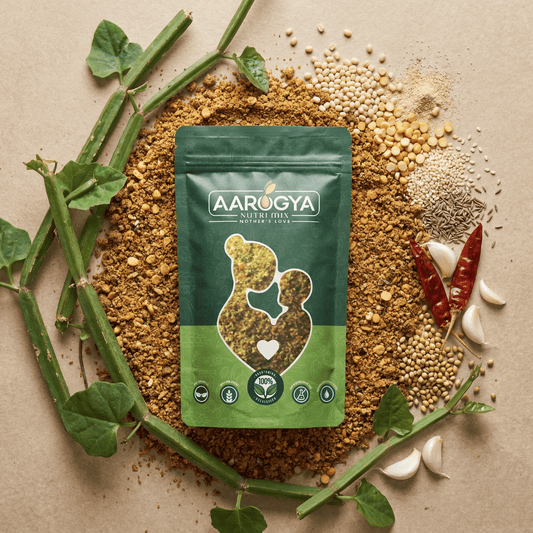
Sathu maavu is a powdered health mix made from a combination of sprouted grains, roasted pulses, millets, and nuts. The exact recipe varies by region and family tradition, but the core principle is consistent: combine multiple nutritious grains and pulses that complement each other's amino acid profiles, roast them individually for flavour and digestibility, and powder them into a smooth flour.
The result is a highly bioavailable, easy-to-digest nutritional powder that can be made into a sweet porridge or a savoury kanji — depending on the child's preference and the family's tradition.
Regional Names for Sathu Maavu
What's Inside Aarogya Sprouted Sathu Maavu?
The Aarogya Nutri Mix version uses a multi-grain, multi-pulse formula that is sprouted before being roasted and ground. Sprouting is the step that separates a good sathu maavu from a great one — it partially breaks down the complex carbohydrates and anti-nutrients (like phytic acid) in grains, making the nutrients significantly more bioavailable and the mix much easier on a child's digestive system.
| Ingredient Type | Nutritional Role | Why It's Sprouted / Roasted |
|---|---|---|
| Grains (wheat, rice, corn) | Carbohydrate energy, B vitamins | Sprouting reduces phytic acid, improves iron absorption |
| Millets (ragi, bajra, jowar) | Calcium, iron, fibre, phosphorus | Roasting improves digestibility, reduces bitterness |
| Pulses (chickpea, moong, toor) | Plant protein, lysine (amino acid grains lack) | Sprouting activates digestive enzymes, reduces flatulence |
| Nuts (almonds, cashews) | Healthy fats, protein, Vitamin E | Roasting for flavour and easier powder formation |
| Spices (cardamom, dry ginger) | Digestive support, warming properties | Used in small amounts for gut health benefit |
The combination of grains and pulses is deliberate — most grains are low in the amino acid lysine, while most legumes have it in abundance. Together, they form a more complete protein profile than either can provide alone.
How to Make Sathu Maavu Porridge — Sweet and Salt Versions
- Mix 2 tbsp sathu maavu powder in 4 tbsp cold water to a smooth paste
- Bring 1 cup milk (or water for dairy-free) to a gentle simmer
- Add the paste, stirring continuously to avoid lumps
- Cook on low heat for 3–4 minutes, stirring throughout
- Remove from heat, add powdered jaggery to taste
- Add a pinch of cardamom powder
- For younger children: thin the consistency with more milk
- Mix 2 tbsp sathu maavu in cold water to a smooth paste
- Bring water to a boil with a pinch of cumin seeds
- Add the paste, cook on medium for 4–5 minutes
- Season with a small pinch of salt
- Add ghee or sesame oil (a small amount) before serving
- For children with diabetes risk: this version is preferred over the jaggery one
Both versions take under 10 minutes. Unlike packaged cereals that dissolve in milk, sathu maavu is a cooked preparation — that brief cooking step is part of what makes it both safe and digestible for young children.
Age-by-Age Guide: When to Introduce Sathu Maavu
Exclusive breastfeeding recommended. No sathu maavu or any solids at this stage.
Start with single-grain versions (plain ragi porridge or rice kanji) before introducing the full sathu maavu blend. The multi-grain complexity is better introduced after the gut has adapted to solids.
Sathu maavu is ideal here. The child has been exposed to multiple single ingredients separately. The blend can be made thin, with breast milk or formula added for familiar taste and nutrition. Begin with once daily.
Excellent daily breakfast or afternoon snack. Can be enriched with banana, apple puree, or sweet potato for flavour variety and additional nutrients. Thicker consistency as the child develops chewing ability.
Works as a breakfast or post-school snack that provides sustained energy without refined sugar spikes. Supports concentration and activity levels through the school day.
Yes — sathu maavu is not only for children. For adults, the salt version without jaggery is ideal. For the elderly and those managing diabetes, the high fibre and low glycemic index make it a good daily staple.
Why Sprouted Sathu Maavu Is Better Than Plain
Many commercial health mixes are not sprouted — they are simply roasted and powdered raw grains. The sprouting step is time-consuming, which is why it gets omitted. But it matters significantly:
Sprouting activates enzymes that break down phytic acid — an "anti-nutrient" found in grains and legumes that binds to minerals like iron, calcium, and zinc and prevents their absorption. Unsprouted grains can look nutritious on a label but deliver significantly less nutrition than the numbers suggest. Sprouting removes this barrier.
Aarogya Nutri Mix takes the sprouting process seriously — each batch is sprouted, then roasted individually for both safety and flavour, then ground to the powder you receive. This is exactly how it was made in traditional South Indian households, and it is what distinguishes a genuine sathu maavu from a convenient imitation.
Frequently Asked Questions
Q1. At what age can babies start sathu maavu?
Stage 2 solid introduction — around 8 months, after the baby has already been introduced to single-grain porridges. Starting before 6 months is not recommended for any solid food, and before 8 months for multi-grain blends.
Q2. Can adults consume sathu maavu daily?
Yes. It works well as a breakfast or snack for adults of all ages. The salt version without jaggery is better for adults managing blood sugar levels. The high fibre content supports digestion and sustained energy.
Q3. Is sprouted sathu maavu safe for children with nut allergies?
The standard formula includes nuts. If your child has a confirmed nut allergy, check the ingredient list carefully and consult your doctor. Nut-free versions can sometimes be prepared at home, though the commercial blend includes almonds and cashews.
Q4. How should it be stored after opening?
Store in an airtight container in a cool, dry place away from direct sunlight. Once opened, use within 2–3 months for best flavour and nutritional quality. A refrigerated, airtight container extends shelf life further in humid climates.
Q5. How is it different from commercial baby cereals?
Commercial baby cereals are typically single-grain (rice or wheat), fortified with synthetic vitamins, and often contain added sugars. Sathu maavu is a multi-grain blend with naturally occurring nutrients from whole food ingredients — no synthetic fortification, no added sugar in the base powder.
Sprouted · Roasted · Traditionally Prepared