
Varsha Ritu is the monsoon season in the Ayurvedic calendar — roughly mid-June to mid-September in most of India. It is one of six Ritus (seasons), each with its own dietary guidance, daily routine recommendations, and specific herbs and foods to favour or avoid. The Varsha Ritu guidelines are among the most detailed in the classical texts, precisely because this season is the most metabolically challenging of the year.
"In the rainy season, the digestive power of living beings is weakened due to the vitiation of all three doshas. One should take food that is easily digestible, light, warming, and unctuous. Sour and salty tastes are beneficial. Raw and heavy foods should be avoided."
— Charaka Samhita, on Varsha Ritu Ahara (monsoon diet)
The instruction is deceptively simple — but each element is specific. "Easily digestible" means cooked, soft, and warm — not raw or cold. "Light" means low in quantity and in the body's perception of heaviness, not low in nutrition. "Warming" means foods and spices that kindle Agni. "Unctuous" means a small amount of ghee or oil to support the dry, Vata-aggravated quality of the season. Sour (amla, tamarind, fermented) and salty tastes specifically support digestive enzyme activity.
What Varsha Ritu Says to Eat — and What to Avoid
Favour in Varsha Ritu
- Warm, cooked, soft-textured preparations — porridge, dal, khichdi, soups
- Warming spices — ginger, black pepper, cumin, coriander, turmeric
- Sour tastes — amla, lemon, tamarind in cooking (small amounts)
- Salty tastes — rock salt preferred over refined salt
- Old jaggery (jaggery powder) — supports Agni, preferred over fresh or refined sugar
- Ghee — small amounts with every meal to lubricate and support absorption
- Light grains — rice, ragi, millet, moong dal
- Buttermilk (with lunch) — supports gut microbiome and digestion
- Boiled or filtered water — avoid waterborne infections
Avoid in Varsha Ritu
- Raw salads and uncooked vegetables — heavy on weakened Agni
- Cold drinks, cold water, ice — suppresses Agni immediately
- Refined white sugar — immunosuppressive at high glycemic loads
- Heavy pulses without preparation — rajma, chana require long soaking and cooking
- Excessive leafy greens raw — contamination risk, heavy in monsoon
- Fish and seafood — monsoon is breeding season, contamination peaks
- Daytime sleep after meals — slows Agni significantly
- New jaggery (freshly made) — considered heavy in classical texts; old/powder form preferred
Five Aarogya Products as the Practical Implementation
The Varsha Ritu dietary framework is not abstract philosophy — it maps directly onto specific food choices available in the modern kitchen. Five Aarogya Monsoon Essentials products implement the classical recommendations in ready-to-use format:
Organic Jaggery Powder — Sugar Cane
The Charaka Samhita specifically recommends old jaggery in Varsha Ritu as a digestive tonic. Jaggery powder is the modern, convenient form — no cutting, no dissolving blocks. It replaces refined sugar directly in tea, porridge, dal, and sweet preparations, providing iron (which sugar lacks entirely), magnesium, and potassium alongside a lower glycemic release that avoids the immunity-suppressing spike of refined sugar.
In Varsha Ritu terms: jaggery supports the sour-salty taste profile recommended for monsoon, stimulates digestive enzyme activity, and cleanses the respiratory and intestinal tracts — three functions that directly address the season's main vulnerabilities.
Black Rice Urad Dal Porridge Mix
Porridge is the quintessential Varsha Ritu food format — warm, soft, easily digestible, made from cooked grains. The Black Rice Urad Dal Porridge Mix takes this beyond plain rice kanji: black rice provides anthocyanins (antioxidants), iron, and fibre; Urad Dal adds protein and calcium. The combination is "loaded with iron, calcium, fiber, and antioxidants" — which is the product's own description and also a fairly accurate summary of what classical texts mean by "nourishing but light."
Shop Black Rice Urad Dal Porridge Mix →
Sprouted Sathu Maavu Health Mix
The sprouting process is a direct implementation of Varsha Ritu's "easily digestible" requirement. Sprouting partially pre-digests complex carbohydrates and reduces phytic acid, producing a multi-grain preparation that delivers nutrition with minimal demand on weakened Agni. This is as close to the classical Ayurvedic concept of prepared, light, multi-grain nutrition as a modern product gets.
Moringa Sesame Kaaram Podi
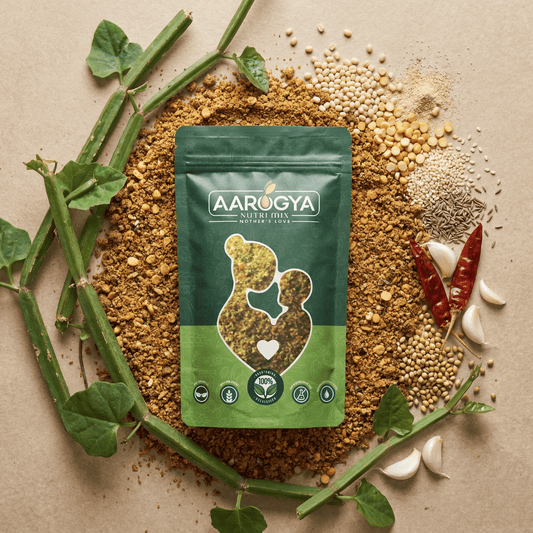
Kaaram podi is the practical implementation of Varsha Ritu's warming spice requirement. Ayurveda recommends consuming warming spices at every meal in monsoon to continually kindle Agni — which does not mean eating chilli with every dish, but ensuring that cumin, coriander, garlic, and similar Agni-supporting spices are present. This kaaram podi contains every one of them, along with Moringa (immune support) and sesame seeds (iron and calcium).
The genius of the traditional condiment format is that it delivers medicinal spices through everyday food rather than as a supplement to remember. Eaten with rice and ghee at every meal, it ensures the warming spice requirement is met automatically.
Shop Moringa Sesame Kaaram Podi →
Lakadong Turmeric Powder
Turmeric appears in virtually every classical Ayurvedic text on Varsha Ritu — as a digestive stimulant, anti-inflammatory, and blood purifier. At 8–10% curcumin content, Lakadong Turmeric is two to three times more potent than standard kitchen turmeric for all these purposes. A pinch in warm milk, dal, or morning tea delivers meaningful curcumin in a form the body can process with minimal effort.
The warming quality of turmeric is exactly what Varsha Ritu prescribes — it counteracts the cold, damp, heavy quality of the monsoon environment by generating metabolic warmth from within. This is not metaphor; curcumin's documented effect on thermogenesis and metabolism has a real warming quality on the digestive system.
A Varsha Ritu Meal Template for the Day
Warm water with honey (below 40°C)
Activates digestion gently. Add a pinch of Lakadong Turmeric for anti-inflammatory action from the first moment of the day.
Sprouted Sathu Maavu or Black Rice Porridge
Warm, with jaggery powder and a small spoon of ghee. The complete Varsha Ritu breakfast — light, warm, nourishing, unctuous.
Herbal Tea or Tulsi Tea
The morning tea ritual that maintains the warming spice intake and keeps Agni supported through the morning.
Rice with Moringa Sesame Kaaram Podi and ghee provides the warming spice requirement. Buttermilk alongside supports gut microbiome in the season when it is most under stress.
The Vitamin C and digestive aid comes through the post-meal candy rather than as a separate supplement. Walk briefly — do not sleep after meals in Varsha Ritu.
Light snack — Moringa Sesame Makhana
The Varsha Ritu-appropriate evening snack: light, warming (spiced), protein-rich, not fried. The opposite of the pakoras that the rain usually inspires.
The anti-inflammatory turmeric works overnight while the body is in repair mode. Jaggery powder instead of sugar if sweetness is preferred.
Frequently Asked Questions
Q1. What should I avoid eating in monsoon according to Ayurveda?
The primary avoidances are: raw foods (salads, uncooked vegetables, raw fruit juices that have been stored), cold drinks and cold water, refined white sugar, day sleeping after meals, and overloading the digestive system with large quantities even of healthy foods. Monsoon is a time for frequent small warm meals rather than two large ones. Fish and seafood are traditionally avoided due to the heightened contamination risk during the breeding season.
Q2. Is it okay to eat jaggery every day in monsoon?
Yes — this is exactly what Charaka Samhita recommends (old jaggery, which is what jaggery powder represents). It is to be used as the primary sweetener in monsoon in moderation: 1–2 tsp in beverages, small amounts in cooking. Not unlimited — it is still sugar — but used in place of refined sugar throughout the day it provides iron and mineral support that white sugar cannot.
Q3. Can I follow a Varsha Ritu diet while fasting (religious fasts common in August)?
The Varsha Ritu framework and religious fasting are compatible. During fasts, the same principles apply to what is eaten: warm preparations, jaggery-sweetened food, warming spices. Sathu maavu and porridge preparations are actually commonly consumed during some Indian fasting traditions and align well with Varsha Ritu's "light and easily digestible" guideline.
Q4. Does following the Varsha Ritu diet mean I have to stop eating my usual South Indian food?
Not at all — South Indian cuisine is already closely aligned with Varsha Ritu recommendations. Idli, dosa, sambar, dal, rice with ghee, rasam, and buttermilk kanji are all Varsha Ritu-appropriate foods. The adjustments are at the margins: replacing refined sugar with jaggery, ensuring food is warm before eating, adding warming spices like the Kaaram Podi to meals, and avoiding raw salads as accompaniments during this season.
Five Products. One Season. The Way Ayurveda Intended.
Jaggery Powder, Black Rice Porridge, Sathu Maavu, Kaaram Podi, and Lakadong Turmeric — the practical Varsha Ritu diet, ready for your kitchen.
Monsoon Essentials CollectionJaggery Powder
Moringa Kaaram Podi
More from Monsoon Essentials
-
Multi Floral Honey
- Immunity Booster Kit
- Cooking Essentials
- Kaaram Podi Collection
-
Full Monsoon Essentials